Aschaffenburger Codex
Media station
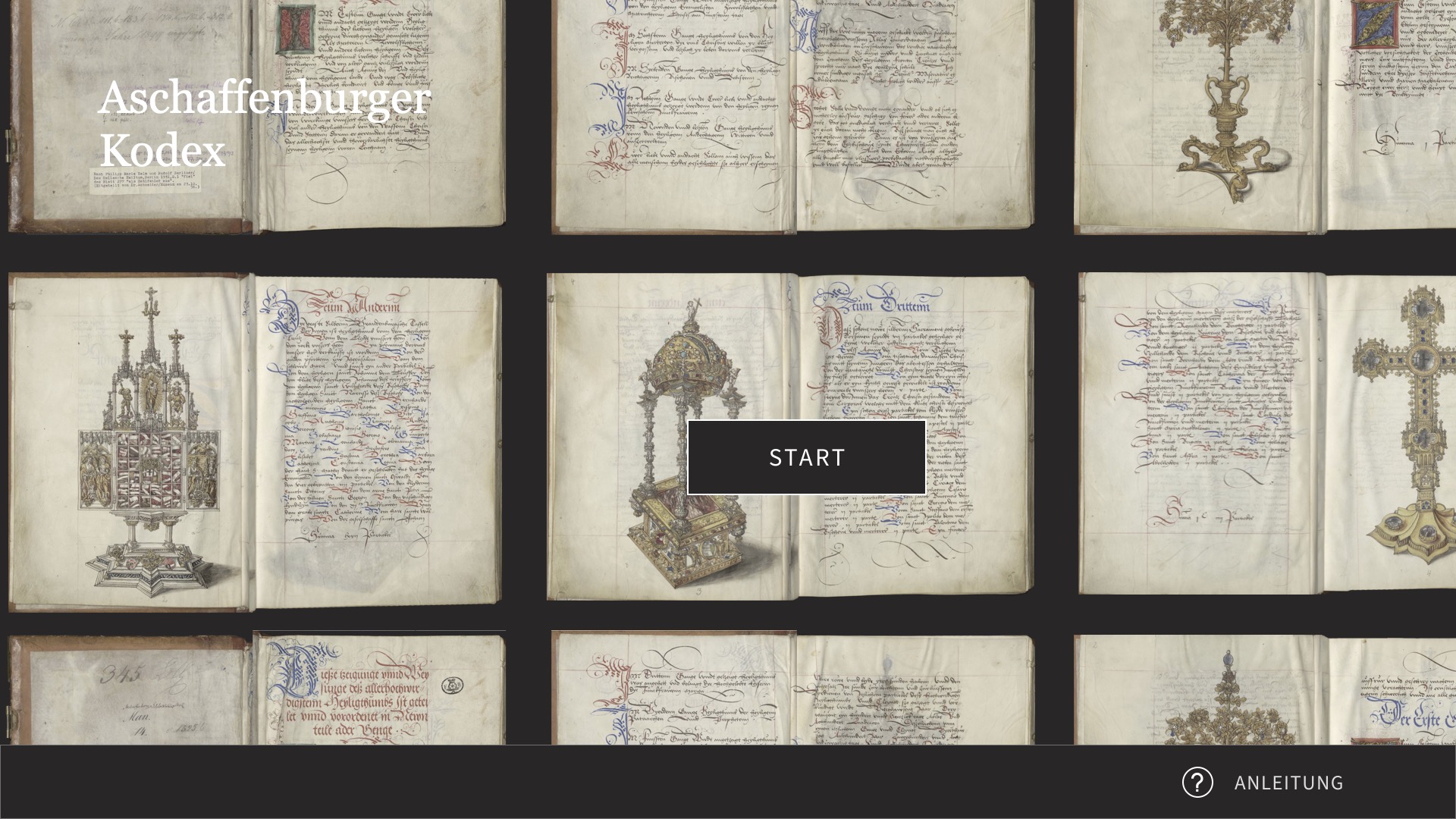
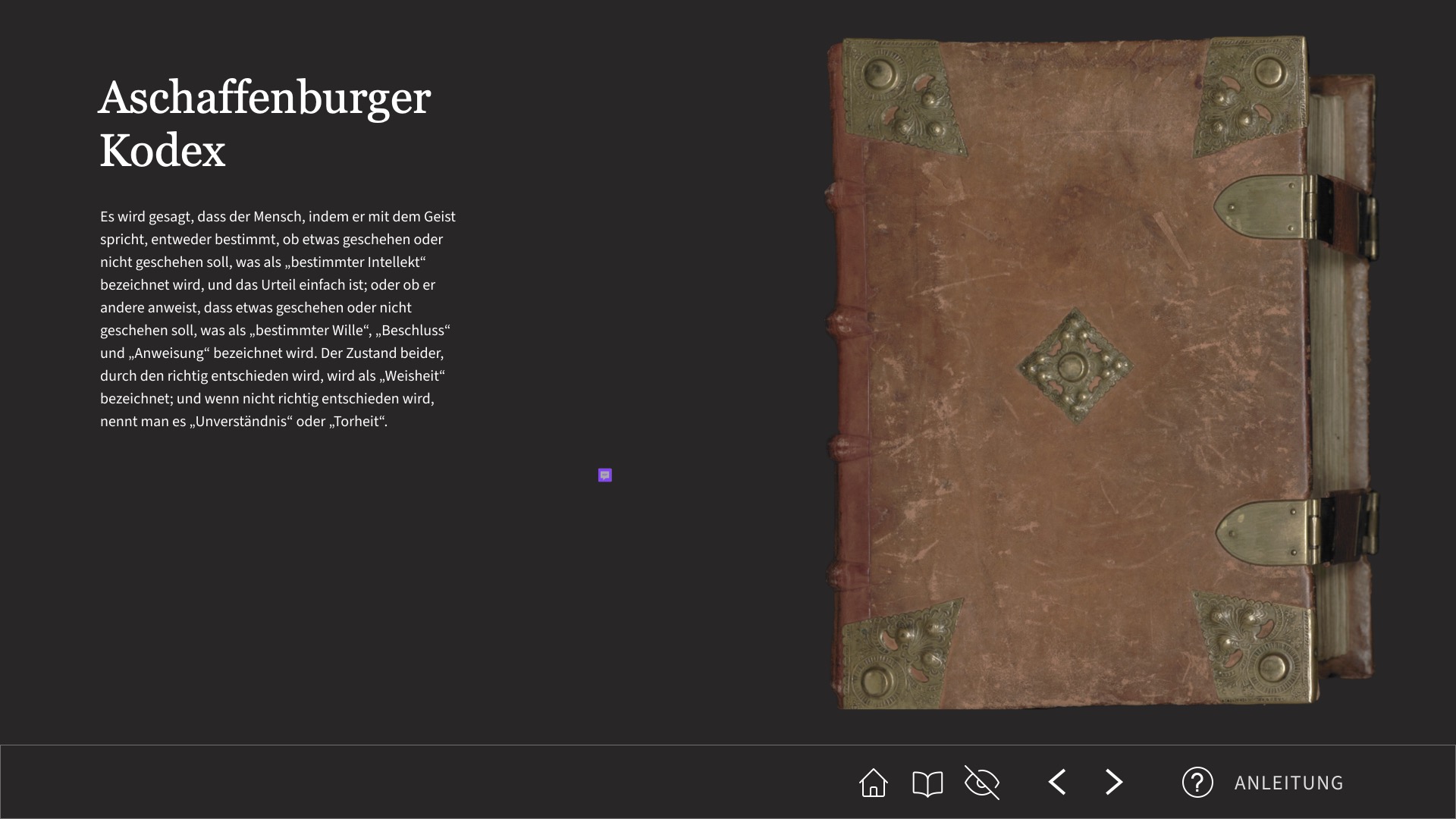
The Aschaffenburg Codex is a richly illustrated 16th-century manuscript documenting the once-famous Hallesches Heiltum, the collection of relics assembled by Cardinal Albrecht of Brandenburg. After the precious relic collection had left Halle and many of its works of art were lost or dispersed over time, the Codex remained as a unique testimony to this important cultural treasure. For Kunstmuseum Moritzburg Halle (Saale), we developed an interactive media station that brings this historical treasure to life digitally.
Digital Accessibility
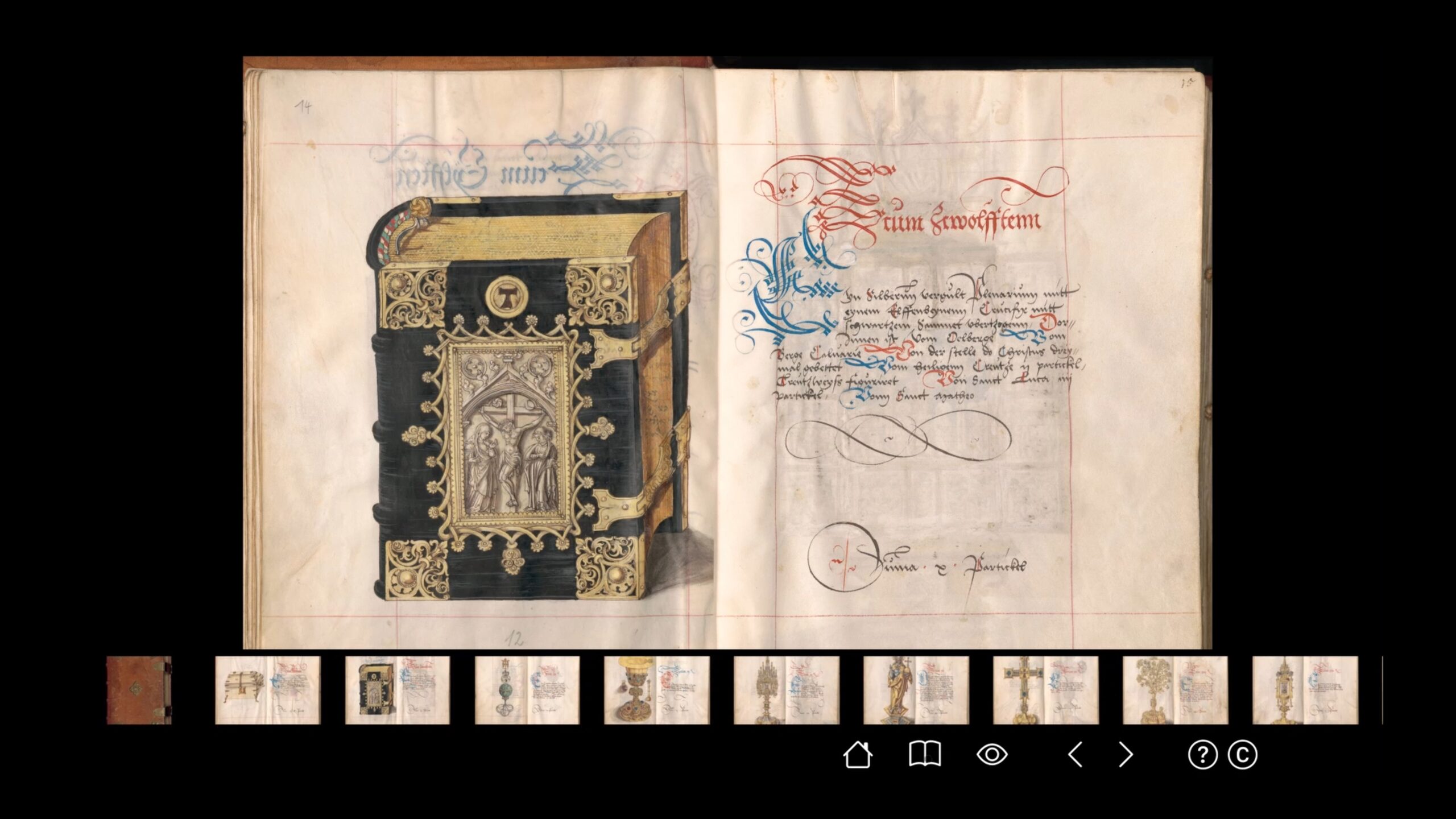
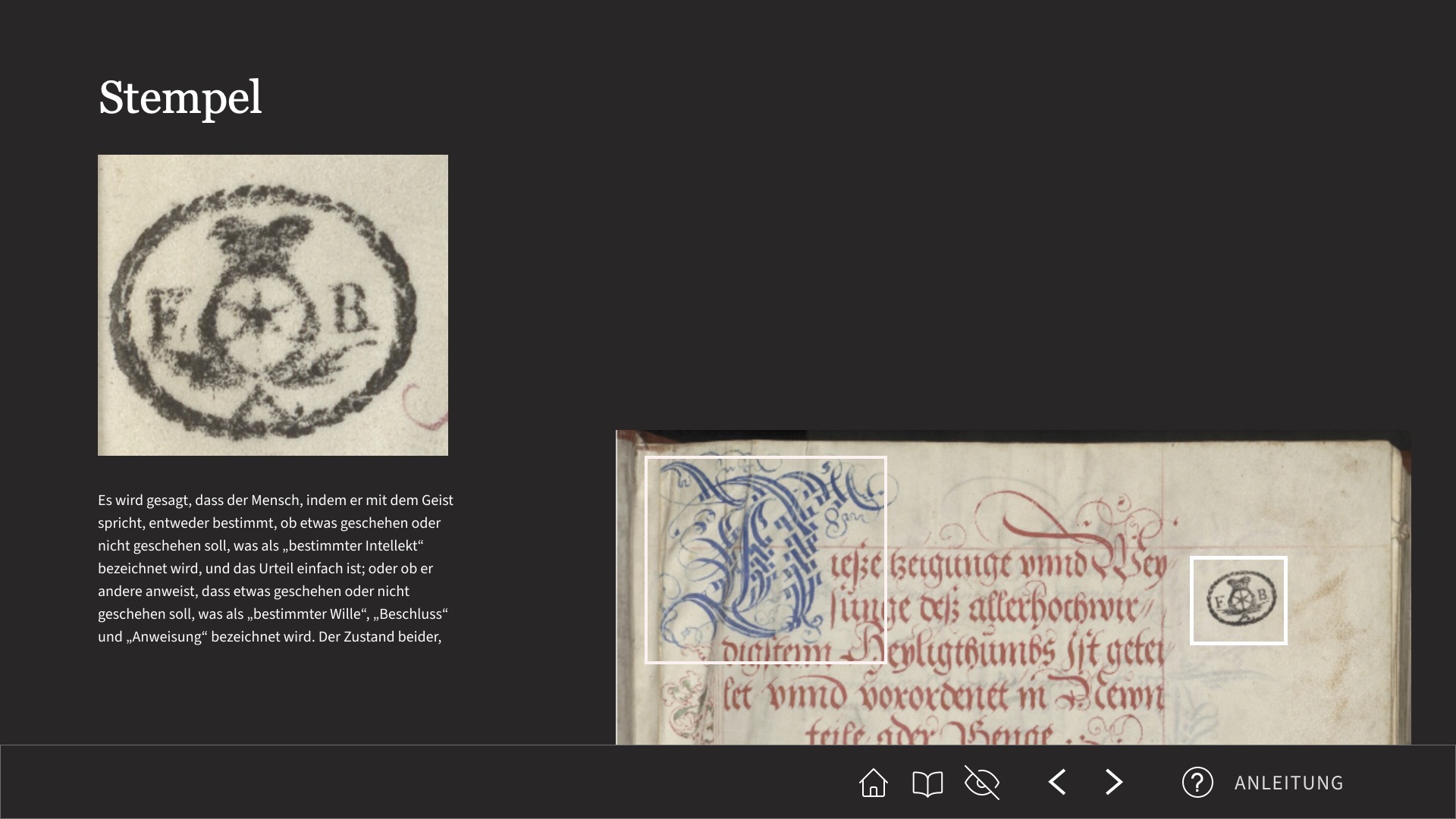
For the media station accompanying the Aschaffenburg Codex, we developed an editorial tool that allowed experts to enter and edit translations, transcriptions and additional information directly alongside the richly detailed book pages. Combined with an integrated IIIF viewer and high-resolution scans, it makes it possible to explore the manuscript down to the smallest detail. In this way, the Codex was not only made accessible from a curatorial perspective, but also opened up to a broad audience in a way that is more immediate and tangible than ever before.
On-site interpretation and in-depth exploration
Our solution gives visitors the opportunity to explore around 60 double pages of the Aschaffenburg Codex independently, from simple browsing to in-depth engagement with provenance, liturgical contexts and the significance of the earliest Halle relic treasury. The result is a digital interpretation experience that makes complex cultural-historical content accessible, interactive and sustainably engaging.
Real added value for the exhibition.
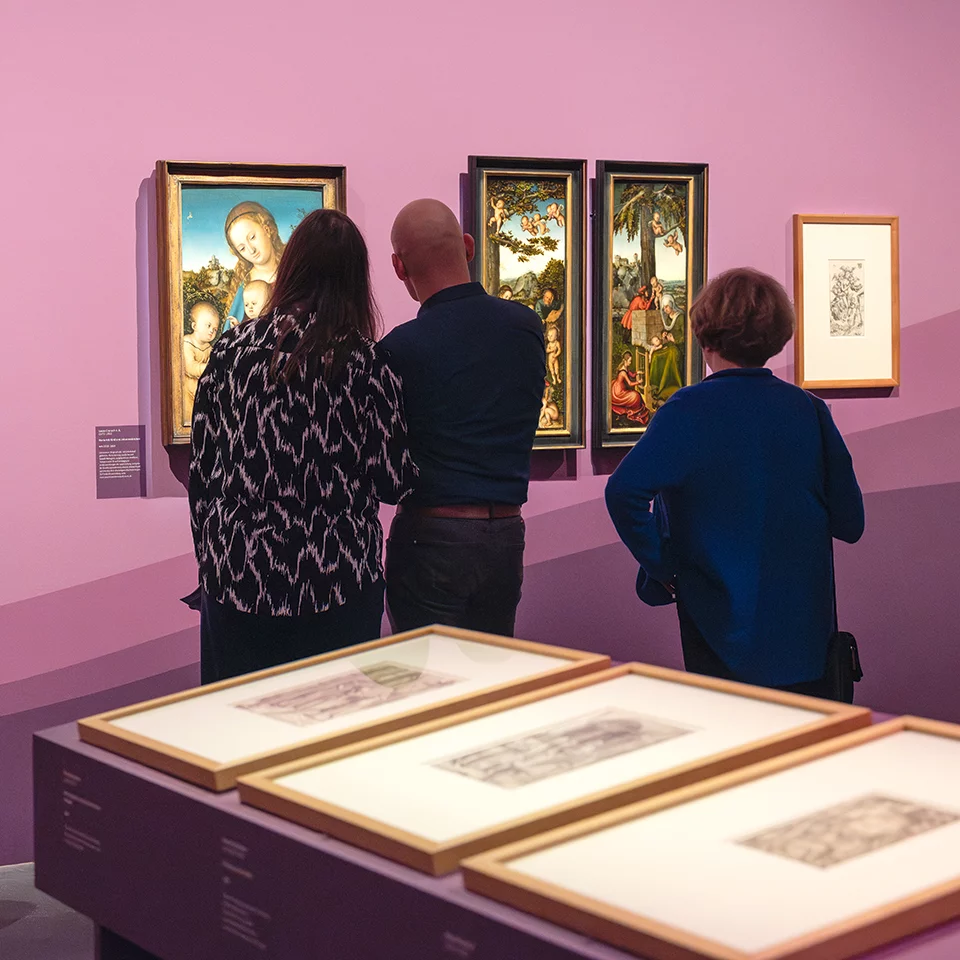
Early Renaissance in Central Germany
An exhibition at Kunstmuseum Moritzburg, Halle (Saale)
24.11.2024 — 02.03.2025