Your
starts here
Whether you are planning an exhibition many months before opening, optimizing your collection storage or reaching your audience far beyond closing time — cura3D gives you the right tools.
For museums, galleries, cultural institutions and everyone who wants to plan exhibitions and showrooms professionally and present them with impact.
Everything in one tool
Digital twins & virtual tours
Media stations & digital experiences











cura3D
One tool. Many functions.
Views & navigation
Switch at any time between floor plan, dollhouse and walk-through 3D view — depending on the perspective you need. The interface is intuitive to use, without having to learn complex workflows.
Space & design
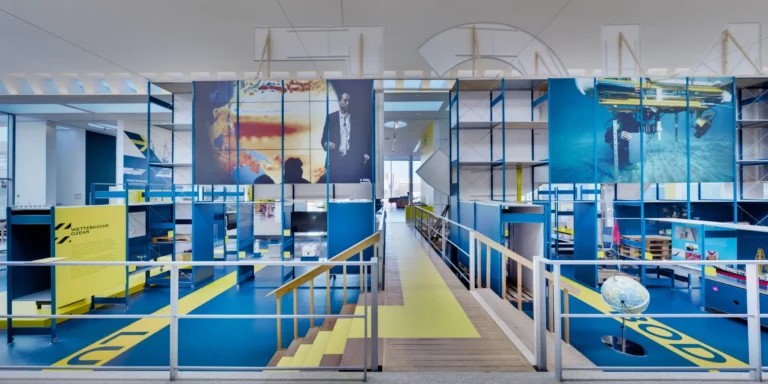
Create temporary architecture in just a few clicks: partition walls, plinths, display cases and displays — positioned and colored directly in the virtual space. Test frames, mats and wall colors as long as you need before making a decision.
Exhibits & collection
Import your holdings from Excel, CSV or directly from your collection management system — metadata, images and dimensions are available immediately. Each exhibit shows at a glance whether it is in the exhibition or in storage.
Export & handover
Export dimensionally accurate wall elevations as PDFs — with all the information art handling needs for installation. Work lists with images and metadata, 2D renderings up to 16K and 3D exports as GLB are also available.
Collection storage planning
Use existing storage areas more efficiently. cura3D makes space potential visible and helps organize works, shelving and storage areas so that more room is created without needing new spaces.
Virtual tours
Include lenders, art handlers and external stakeholders in coordination without additional licenses. Differentiated rights management ensures that protected works and sensitive information are visible only to authorized people.
Make exhibitions, content and brands digitally accessible.
Brilliant image quality
With more than 500 megapixels per panorama, our virtual tours make spaces, exhibits and details vividly sharp. HDR captures ensure that different lighting conditions are rendered naturally and evenly, from bright window areas to finely lit object zones.
Easy navigation
Visitors move intuitively through the virtual tour: by clicking from viewpoint to viewpoint, via interactive hotspots or directly through the floor plan. This helps them quickly find their way around and explore exhibitions, showrooms, trade fair booths or real estate independently, without any technical knowledge.
Intuitive CMS
With the integrated CMS, virtual tours can be expanded with additional content at any time. Audio, video, texts, PDFs, images or 3D models can be placed directly at the right locations in the space. This creates digital experiences that do more than show rooms: they tell stories, share knowledge and present offers clearly.
API integration
If needed, virtual tours can be connected to existing systems via interfaces. Content, media or metadata can be integrated and kept up to date from existing databases, websites, collection management systems, CRM systems or booking systems.
IIIF viewer
An integrated IIIF viewer makes high-resolution image collections available directly within the virtual tour. Visitors can examine paintings, documents, photographs or archival materials in detail, zoom smoothly and recognize even the finest structures. Existing IIIF sources can be integrated, connecting digital collections seamlessly with the spatial experience.
Guided tours
Guided tours lead visitors through selected rooms, themes or exhibits in a targeted way. Stations, viewing directions and content can be curated together so the virtual tour becomes a clear narrative. Ideal for digital exhibitions, mediation formats, product presentations or guided tours outside regular opening hours.
Stage knowledge, history and objects
Immersive time travel
Historical architecture is digitally reconstructed and made accessible as a spatial experience. Visitors can explore past building states, understand changes and experience history where images or texts alone reach their limits. The applications are suitable for museums, exhibitions, web formats, media stations and immersive installations.
Digital exhibitions
Curated content becomes interactive web experiences: with text, image, video, audio, 3D and clear dramaturgy. The result is digital exhibitions that communicate complex topics clearly and make them accessible beyond the museum visit.
Participatory curation
Participatory applications make curatorial processes accessible: visitors select objects, develop their own arrangements, test hangings or create personal thematic routes. This creates digital formats that actively connect collection, mediation and audience.
Architectural reconstruction
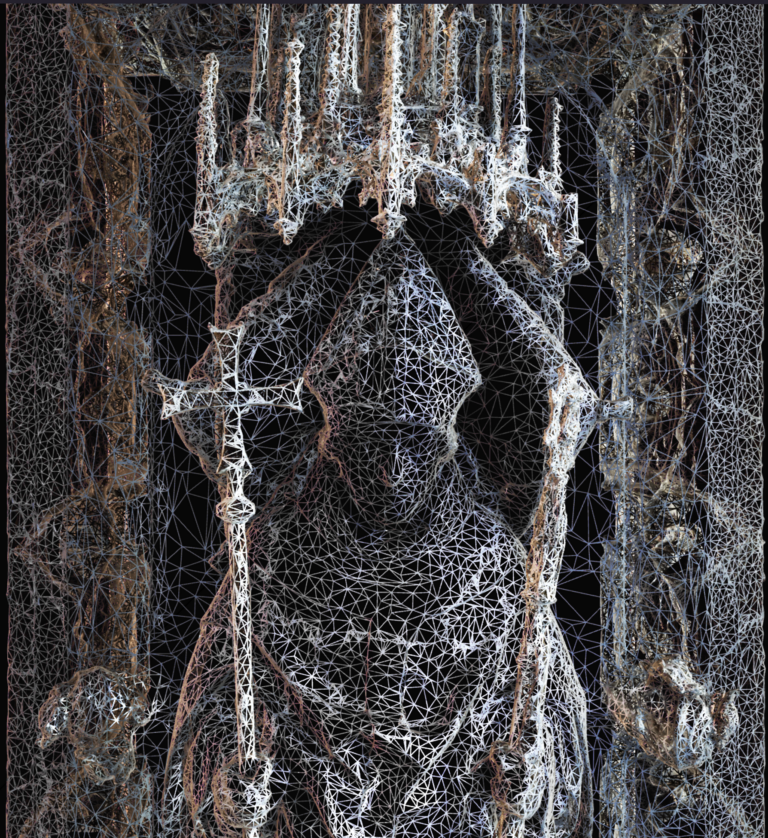
We digitally reconstruct historical architecture based on plans, photographs, source material and scholarly assumptions. Lost, altered or hard-to-access building states become visible again and spatially understandable. The models can be used for research, mediation, exhibitions, web applications, films or immersive installations.
High-resolution book viewer
Digitized books, manuscripts and archival materials are made accessible in high resolution via IIIF. Visitors browse intuitively, zoom into details and discover content that is often only partially visible or accessible in the original.
Configurators
We develop product configurators that make variants, materials, dimensions and features directly tangible. Users assemble products step by step, compare options and immediately see how their choices affect the result. This makes complex products easier to understand, consultation processes more efficient and purchasing decisions more confident — in the browser, at the point of sale or as an embedded tool on the website.
Media stations
We develop media stations that make content accessible directly in the exhibition space: intuitive to use, visually refined and precisely tailored to topic, room and audience. Whether touchscreen, projection, interactive table or multi-screen application: texts, images, films, audio, 3D models and collection data become clearly guided mediation experiences.
Client voices
Questions?
We are happy to advise you.
Do you have questions about the software or would you like individual advice for your museum or gallery? Our expert team is happy to support you in digitizing your exhibition planning.
How to reach us
Do you prefer to speak with us directly?
Our team will answer your questions quickly and straightforward.